Europe’s Bioeconomy Strategy: Building the Bridge from Innovation to Market
Europe has spent more than 20 years investing in bioeconomy research and innovation. The latest EU bioeconomy strategy shifts attention to the next stage: how can more of that research reach industrial scale and become part of the products, supply chains and manufacturing systems used across Europe?
For synthetic biology companies, this is a familiar challenge. Commercialisation depends on more than proving that a process works. It requires access to larger facilities, capital, predictable regulation and customers willing to adopt a new product. The strategy brings these conditions together within a vision that runs to 2040.
A strategy for circular biological production
The EU’s bioeconomy strategy is intended to support a shift away from fossil dependence towards circular production based more heavily on biological resources. Adopted in November 2025, it is organised around four areas: scaling innovation and investment, creating lead markets for bio-based products, securing a sustainable biomass supply and pursuing global opportunities.
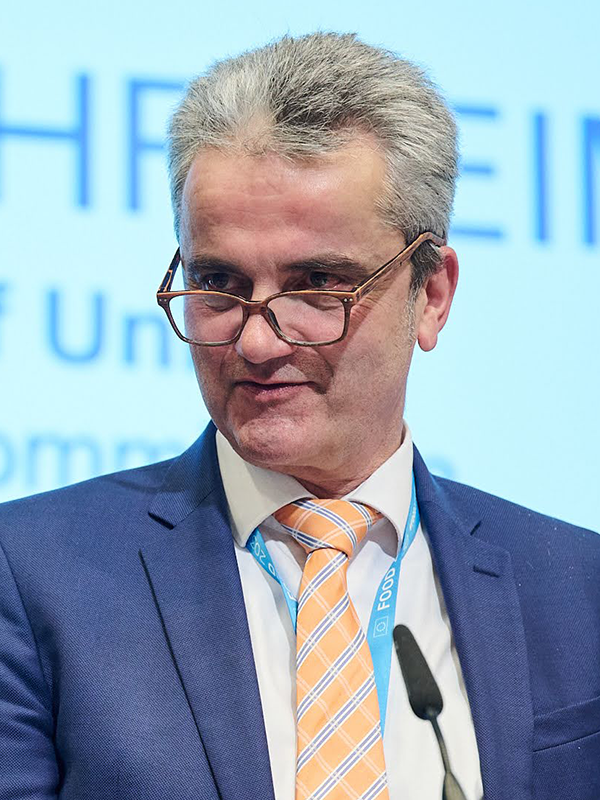
Peter Wehrheim, Head of Unit for Food Systems and Bioeconomy at the European Commission’s Directorate-General for Research and Innovation, spoke to us about Europe’s bioeconomy strategy ahead of his appearance at SynbiTECH 2026. He described the bioeconomy as central to Europe’s transition from fossil-based production towards a circular economy in which biological production plays a greater role.
That foundation has supported Europe’s position in areas such as foundational research, sustainability metrics and early-stage IP. The current task is to turn a larger share of that work into products that can compete commercially.
Synthetic biology, such as precision fermentation and advanced fermentation, have a direct role in this transition. Wehrheim describes these technologies as enabling the production of high-value foods, ingredients and materials from waste streams and biogenic carbon, while reducing pressure on land-intensive production. They also offer ways to use biomass more efficiently, which matters in a region where land and renewable biological resources are limited.
Europe’s scale-up gap
Europe’s scientific strength does not automatically translate into biomanufacturing capacity and there are constraints later in the development cycle.
Twenty-seven national markets, differences in how EU rules are implemented and country-specific requirements can create friction for growing companies. Early-stage finance is comparatively well established, but later-stage capital is harder to secure, particularly when a business needs to fund a multi-million-euro demonstration facility. Energy costs add another difficulty for processes that must compete internationally.
Physical infrastructure is part of the same problem. Europe has a shortage of open-access fermentation facilities with bioreactors above 10,000 litres, where scale-ups can produce trial batches without first building their own plants. Shared facilities can shorten the route to commercial validation by allowing companies to test process performance, economics and product quality at a meaningful scale.
The Circular Bio-based Europe Joint Undertaking (CBE JU) is one mechanism intended to address this gap by pooling public and private investment and supporting pilot, demonstration and first-of-a-kind plants. Its role is not simply to fund more research, but to reduce the risk attached to projects that sit between technical proof and a commercial facility.
Wehrheim states that the CBE JU’s portfolio has delivered 19 first-of-a-kind biorefineries and more than 150 demonstration plants, while mobilising approximately €3.5 of private capital for every €1 of public funding. Over the next five years, the measure of progress will be whether this foundation supports a sustained increase in commercial-scale plants coming online.
Closing Europe’s scale-up gap requires connecting breakthrough science with growth-stage capital. Initiatives like the European Innovation Council’s new €5 billion Scaleup Europe Fund, backed by major institutional investors and managed by EQT, directly target this late-stage shortfall. By injecting private and public capital into strategic areas like biotechnology, the fund has the potential to ensure Europe’s most promising bio-based companies can scale and build commercial-scale plants on home soil.
Speed without abandoning safeguards
Europe’s longer pre-market authorisation pathways can delay access compared with other regions. Wehrheim nevertheless stresses that citizens and consumers expect products to be assessed before they reach the market. The policy challenge is therefore to make approvals more predictable without weakening those safeguards. Regulatory sandboxes, earlier engagement between innovators and regulators, and more consistent pathways across Member States could reduce delays, while public procurement may help create early demand for bio-based materials giving producers a clearer market while capacity is being established.
A bioeconomy shaped by place
Europe’s regional diversity can create fragmentation, but it also gives the bioeconomy a broad resource base. Bioeconomy activity is inherently tied to place. Coastal regions may have strengths in the blue bioeconomy, while forest-rich regions can build value chains around forest biomass. Agricultural and industrial regions may be better positioned to use residues, side streams and existing processing infrastructure.
A common European market therefore does not require every region to pursue the same model. Its value lies in allowing locally appropriate production systems to connect with finance, regulation and customers across national borders. Synthetic biology can contribute by helping different feedstocks and waste streams become inputs for higher-value production, rather than prescribing a single technological pathway.
What would success look like?
For Wehrheim, the clearest test of the strategy will be whether bio-based products move into routine commercial production and use. Bio-based textiles, plastics, construction materials, foods and ingredients would need to move beyond isolated examples and become widely available. More demonstration projects would need to progress into dependable commercial operations. Approval times would need to become shorter and more predictable without weakening safety standards.
Resource efficiency is equally important. Scaling the bioeconomy cannot mean creating new pressure on scarce biomass. Progress will depend on extracting more value from renewable resources, using waste and side streams more effectively, and matching technologies to the strengths of different regions.
This is the bridge Europe is now trying to build. The scientific foundation is already substantial. The harder work is connecting it to finance, infrastructure, regulation and demand so that promising biological production processes can operate at the scale the market requires. For the synthetic biology community, the strategy’s significance lies in whether those connections become easier to make.